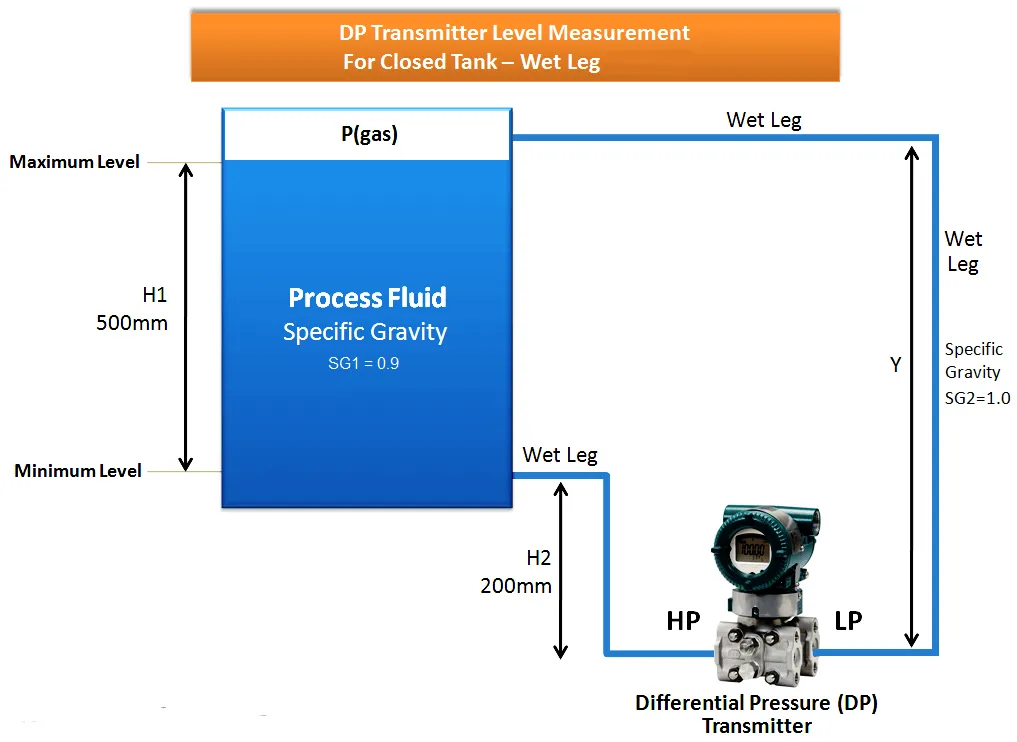
A differential pressure (DP) transmitter measures liquid level by comparing the pressure at the bottom of the tank with a reference pressure. To calibrate it you need two numbers: the LRV, the differential pressure at 0% level (4 mA), and the URV, the differential pressure at 100% level (20 mA). Use the calculator below, or follow the formulas and the wet-leg worked example further down.
Open tank, dry leg and wet leg · Step-by-step working · Results in mmH₂O, mbar, kPa, bar and psi
Differential Pressure Level Range Calculator
The formulas
How the LRV and URV are calculated
The transmitter reports ΔP = HP − LP. HP is the pressure on the high-pressure side, which is connected to the lower tap. LP is the pressure on the low-pressure side, which is the upper tap, a dry leg, or atmosphere. Specific gravity multiplied by a height in mm gives a pressure in mmH₂O.
Open tank
The tank vents to atmosphere, so LP is zero and only the lower tap is connected.
LRV = SG1 × h
URV = SG1 × (h + L)
Closed tank, dry leg
The gas above the liquid does not condense. The upper tap is piped to LP, and vapour pressure acts on both sides and cancels.
LRV = SG1 × h
URV = SG1 × (h + L)
Closed tank, wet leg
Vapour can condense, so the upper tap is piped to LP through a leg filled with a reference fluid.
LRV = SG1 × h − SG2 × H
URV = SG1 × (h + L) − SG2 × H
L tank height between the taps · h distance from the transmitter up to the lower tap · H height of the wet leg · SG1 process fluid specific gravity · SG2 wet leg fluid specific gravity. Use the same length unit for L, h and H. The span is always SG1 × L.
Calibration
How to set the range on the transmitter
1. Calculate LRV and URV
Use the formulas or the calculator above, and keep the result in the unit your transmitter uses, such as mmH₂O, mbar or kPa.
2. Connect the calibrator
Isolate the transmitter from the process and connect a pressure source and a mA meter, or a HART communicator.
3. Set 4 mA at the LRV
Apply the LRV as the differential pressure and set it as the 4 mA point. A negative value means applying pressure to the LP side.
4. Set 20 mA at the URV
Apply the URV and set it as the 20 mA point. On a HART transmitter you can also type the LRV and URV in directly.
5. Check the points
Verify 25%, 50% and 75% against the check table in the calculator, then reconnect and confirm the zero against a known tank level.
Pressure transmitters for DP level measurement
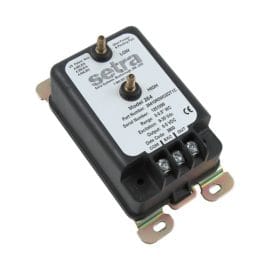
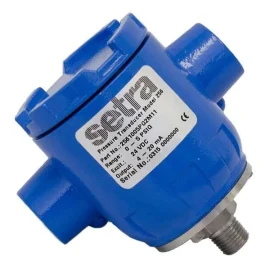
Worked out your LRV and URV? Send us the range, process connection and whether you need a wet leg or diaphragm seals, and we'll recommend a pressure transmitter, calibrated to your range, with a quotation.


FAQ
DP level calculation questions
What are LRV and URV?
LRV (lower range value) is the differential pressure at which the transmitter outputs 4 mA, which is the pressure at 0% level. URV (upper range value) is the differential pressure at 20 mA, which is the pressure at 100% level. The difference between them is the span.
What does a negative LRV mean?
The differential pressure at 0% level is below zero. This is normal with a wet leg, because the reference leg pressure is larger than the process pressure when the tank is empty. The transmitter must support this zero elevation, so check its lower range limit. Most smart transmitters let you enter a negative LRV and URV directly.
When should I use a wet leg instead of a dry leg?
Use a wet leg when vapour above the liquid can condense, for example in steam or humid services, because condensate in a dry leg would add an unpredictable head. Use a dry leg when the gas stays dry. An open tank needs neither, because the low side is simply vented to atmosphere.
Why is the span SG1 × L and not just L?
The span is the change in differential pressure between an empty and a full tank. Each millimetre of level adds SG1 mmH₂O, so the span is SG1 × L. With SG1 = 0.96 and L = 700 mm the span is 672 mmH₂O, not 700.
How do I convert mmH₂O to kPa or mbar?
1 mmH₂O = 9.80665 Pa = 0.0980665 mbar = 0.00980665 kPa. For example, −768 mmH₂O is about −7.53 kPa. The calculator converts the result for you.
How do I convert density to specific gravity?
Divide the density in kg/m³ by 1000, or use the density in g/cm³ directly. A fluid of 960 kg/m³ is 0.96 g/cm³, so its specific gravity is 0.96.
How do I calculate LRV and URV with diaphragm seals?
With a dual diaphragm seal system both capillaries are filled with the seal fill fluid, so use that fluid’s specific gravity (SG2) for the transmitter-to-lower-seal distance h as well as for H: LRV = SG2 × (h − H) and URV = SG1 × L + SG2 × (h − H). Confirm the result with the seal manufacturer’s sizing tool.
More instrumentation calculators: 4-20mA calculator · turndown ratio calculator · mag meter velocity and flow · pressure unit converter